
- Safety is the most important part of a successful hunt.
- It is recommended that each person wear an upper garment and /or hat of blaze orange. Eye protection is also encouraged.
- Think before you shoot. You have ample time and opportunity to shoot the birds.
- There is no shooting at ducks, geese, rabbits, or squirrels.
- There is no shooting at game or any object on the ground.
- 99% of the time your gun should be on safe.
- The muzzle of the gun should be higher than shoulder height before you shoot.
- When posting and driving fields it is essential that no shots be fired by the drivers toward the posters, nor any shots be fired by the posters toward the drivers.
- All hunters should stay in a straight line when walking in the field.
- All hunters must know the location of all persons, dogs, and property within the area.
- Any hunter acting in an unsafe manner will be asked to leave the field.
- Any hunter who has consumed alcoholic beverages prior or during the hunt will be asked to leave the hunting area.
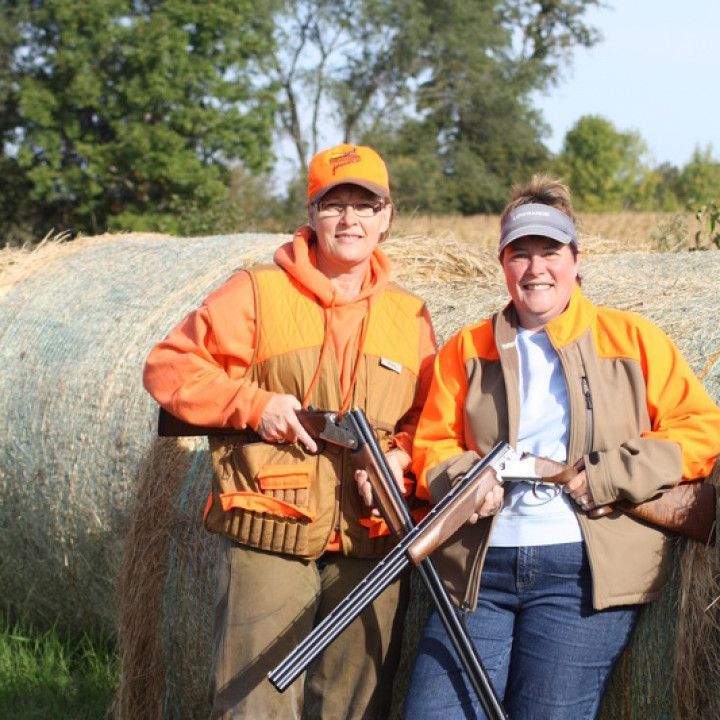
Essential Gun Safety Guidelines
What are the basic rules of gun safety?
The four core rules of gun safety are: 1) Always treat every firearm as if it’s loaded. 2) Never point a firearm at anything you don’t intend to shoot. 3) Keep your finger off the trigger until ready to fire. 4) Be sure of your target and what’s beyond it. These rules apply at all times, whether at home, in the field, or at a range.How should firearms be stored safely at home?
Firearms should be stored unloaded in a locked safe or secured with a locking device. Store ammunition separately to prevent unauthorized access, especially around children or guests.What is the safest way to carry a firearm while hunting?
When hunting, carry firearms with the safety engaged, muzzle pointed in a safe direction, and finger off the trigger. Always unload the firearm before crossing obstacles like fences or uneven terrain.When should I use the safety on a firearm?
Engage the safety any time you are not actively preparing to shoot. However, never rely solely on a mechanical safety—always follow all other safety rules.How do I know what’s beyond my target?
Before taking a shot, clearly identify your target and be aware of what lies behind it. Bullets can travel long distances, so avoid shooting in the direction of people, roads, or structures.What should I do if a firearm malfunctions?
Keep the firearm pointed in a safe direction and wait several seconds in case of a delayed discharge. Then carefully unload it following manufacturer guidelines or seek help from someone experienced.
Is gun safety training necessary?
Yes. Even experienced firearm owners benefit from formal safety training. Courses reinforce proper handling, storage, and decision-making in real-world situations.
How can I safely transport firearms?
Firearms should be unloaded, secured in a case, and stored in a location that prevents movement during transport. Always follow local and state laws regarding firearm transportation.
What should I teach kids about gun safety?
Children should be taught:
- Never touch a firearm without adult supervision
- Leave the area immediately if they find one
- Tell a responsible adult right away
Education is one of the most effective ways to prevent accidents.
Why is muzzle control so important?
Muzzle direction is critical because it determines where a firearm is pointed at all times. Maintaining control ensures that even in an unexpected situation, no one is put at risk.